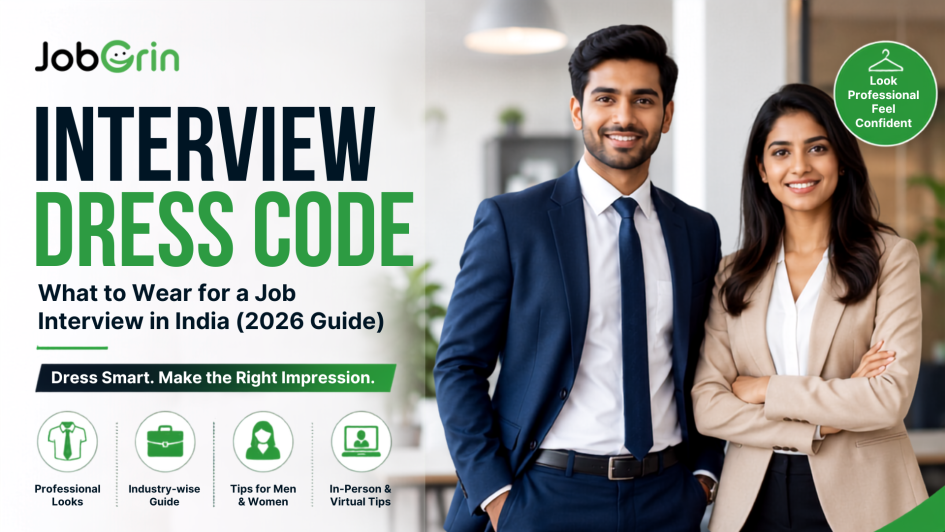
First impressions matter.
Before you introduce yourself, answer interview questions, or showcase your skills, your appearance communicates confidence, professionalism, and attention to detail. Recruiters often form an initial impression within the first few moments of meeting a candidate, making your interview dress code an important part of your overall preparation.
Before deciding what to wear, make sure you’ve prepared for the interview itself. Our guide on Interview Tips for Successful Job Interviews covers everything from interview preparation to answering common questions.
Whether you’re attending your first campus placement, applying for an IT job, interviewing with a multinational company, or meeting recruiters at a startup, wearing appropriate attire can help you feel more confident and create a positive impression.
This guide explains everything you need to know about interview dress code in India, including what men and women should wear, industry-specific recommendations, grooming tips, common mistakes, and practical advice for both in-person and virtual interviews.
Why Is Interview Dress Code Important?
Your clothing reflects your professionalism, preparation, and respect for the opportunity.
Although employers hire candidates based on their skills, experience, and attitude, dressing appropriately demonstrates that you understand workplace expectations and take the interview seriously.
A professional appearance helps you:
- Build confidence before entering the interview room
- Create a strong first impression
- Show respect for the interviewer and company
- Reduce unnecessary distractions
- Project professionalism and maturity
Your clothing creates the first impression, while your posture, eye contact, and confidence reinforce it. Read our guide on 27 Body Language Tips for Your Job Interview to understand how non-verbal communication influences recruiters.
Remember, your outfit should support your personality, not become the center of attention.
Understand the Company’s Dress Code Before the Interview
Different industries have different expectations.
Research the company through its website, LinkedIn page, employee photos, or social media profiles. This gives you an idea of the workplace culture and helps you choose suitable attire.
If you’re preparing for an interview, researching the company is only one step. Learning what recruiters expect can also improve your confidence. Our article on Techniques Used by HR to Evaluate Interviewees explains how interviewers assess candidates beyond their resumes.
If you’re unsure, it’s always safer to dress one level more formal than the company’s everyday dress code.
Interview Dress Code for Men
A clean, simple, and well-fitted outfit works best for most interviews.
Recommended Outfit
- White, light blue, or pastel formal shirt
- Navy blue, charcoal grey, or black trousers
- Black or brown leather belt
- Polished formal shoes
- Dark formal socks
- Well-ironed clothes
If you’re interviewing for banking, finance, consulting, or management roles, adding a blazer or suit jacket creates a stronger professional appearance.
Should Men Wear a Tie in an Interview?
A tie isn’t mandatory for every interview.
It’s recommended for:
- Banking
- Financial Services
- Consulting
- Government Jobs
- Senior Management Positions
- Hospitality
For software companies and startups, a tie is optional unless specifically mentioned.
Interview Dress Code for Women
Professional clothing should be comfortable, elegant, and workplace appropriate.
Suitable options include:
- Formal shirt with trousers
- Business suit
- Solid-coloured kurta with straight pants
- Blazer with formal trousers
- Knee-length formal dress (where appropriate)
Footwear
Choose:
- Closed-toe flats
- Low heels
- Formal shoes
Avoid:
- Flip-flops
- High platform heels
- Glittery footwear
Accessories
Keep accessories minimal.
Choose:
- Simple watch
- Small earrings
- Neutral handbag
Avoid heavy jewellery or accessories that distract from your professional appearance.
Business Formal vs Business Casual
Many candidates get confused between these two dress codes.
| Business Formal | Business Casual |
| Suit or blazer | Formal shirt |
| Tie | No tie required |
| Formal trousers | Chinos or formal trousers |
| Leather shoes | Formal loafers |
| Corporate interviews | IT companies & startups |
If you’re unsure whether a role requires business formal or business casual attire, our detailed guide on Business Formal Attire explains workplace dress expectations in greater detail.
Interview Dress Code by Industry
IT & Software
Technology companies usually prefer business casual clothing.
A formal shirt, clean trousers, and polished shoes are sufficient.
Avoid graphic T-shirts, hoodies, and ripped jeans unless you’re specifically told the workplace is extremely casual.
Technical interviews also evaluate your problem-solving skills. Prepare beyond your appearance by reading How to Prepare for Technical Interviews.
Banking & Finance
Banking interviews expect formal business attire.
Recommended:
- Suit or blazer
- White or light blue shirt
- Tie (for men)
- Formal shoes
Professional appearance matters significantly in customer-facing financial roles.
Startups
Startup environments are generally relaxed, but interviews still require professionalism.
Business casual works well.
Avoid dressing too casually simply because the office culture appears informal.
Sales & Marketing
Sales professionals represent the company before clients.
Dress sharply with clean, well-fitted clothing.
Confidence and presentation play an important role.
Government Interviews
Government interviews generally require conservative dressing.
Simple formal clothing in neutral colours creates the best impression.
Avoid flashy fashion choices.
Best Colours for Interviews
Colour influences first impressions.
Safe colours include:
- White
- Navy Blue
- Grey
- Black
- Light Blue
- Beige
Avoid:
- Neon colours
- Bright orange
- Loud prints
- Glitter
- Excessively bright red
Neutral colours communicate professionalism and confidence.
What Should Freshers Wear?
Freshers often believe they need expensive branded clothing.
That’s not true.
Interviewers care more about cleanliness, fit, and confidence than clothing brands.
A neatly ironed shirt, formal trousers, polished shoes, and proper grooming are enough to create a professional impression.
Focus on looking organised rather than fashionable.
What Should Experienced Professionals Wear?
Experienced candidates should dress according to the seniority of the position.
Leadership interviews generally require more formal attire than entry-level interviews.
A blazer, formal shoes, quality accessories, and a professional appearance demonstrate executive presence without appearing overdressed.
Virtual Interview Dress Code
Online interviews require the same level of professionalism as in-person interviews.
Before joining:
- Wear formal clothing.
- Sit in a well-lit room.
- Use a clean background.
- Position your camera at eye level.
- Avoid noisy surroundings.
Even if the interviewer only sees your upper body, dressing professionally helps improve confidence and creates the right mindset.
Grooming Tips Before the Interview
Your outfit is only one part of your appearance.
Before the interview:
- Get a haircut a few days in advance.
- Trim facial hair neatly.
- Keep your nails clean.
- Polish your shoes.
- Iron your clothes.
- Use mild deodorant.
- Carry a clean folder for your resume.
- Turn your phone to silent mode.
Good grooming reflects attention to detail.
Common Interview Dress Code Mistakes
Many candidates lose confidence because of simple mistakes.
Avoid:
- Wrinkled clothing
- Dirty shoes
- Casual sneakers
- Graphic T-shirts
- Hoodies
- Ripped jeans
- Strong perfume
- Heavy makeup
- Flashy jewellery
- Untidy hair
- Overloaded pockets
- Clothes that don’t fit properly
Professional dressing is about looking neat, not expensive.
Dressing well isn’t enough. Candidates also lose opportunities because of poor communication and weak interview answers. Avoid these mistakes by reading Interview Tips for Successful Job Interviews.
Improved Interview Dress Code Checklist
Before heading to your interview, make sure you’ve covered these essentials:
- Wear clean, well-ironed clothes.
- Polish your shoes for a professional appearance.
- Style your hair neatly.
- Keep your nails clean and well-groomed.
- Carry a printed copy of your resume.
- Switch your phone to silent mode.
- Freshen your breath before entering the interview.
- Match your belt with your shoes for a polished look.
- Choose minimal accessories that don’t distract.
- Walk in feeling comfortable and confident.
Frequently Asked Questions
What is the best interview dress code?
Business formal or business casual clothing in neutral colours is the safest choice for most interviews.
Can I wear jeans to an interview?
Unless the interviewer specifically mentions a casual dress code, avoid jeans and choose formal trousers or chinos.
Should I wear black or white?
Both colours are excellent choices. White shirts with navy or charcoal trousers remain one of the most professional interview combinations.
Can women wear traditional Indian attire?
Yes. A simple kurta with formal pants or a neatly draped saree is appropriate for many workplaces, provided it looks professional and comfortable.
Is a blazer necessary?
Not always. Blazers are recommended for banking, consulting, finance, and management interviews but are optional for many IT and startup roles.
Is it okay to ask HR about the interview dress code?
Yes. If you’re unsure, politely ask the recruiter whether there’s a preferred dress code. It shows you’re preparing thoughtfully and want to present yourself appropriately.
Final Thoughts
Choosing the right interview dress code isn’t about wearing expensive clothes, it’s about presenting yourself as a confident, organised, and professional candidate.
Clean, well-fitted clothing, polished shoes, good grooming, and positive body language can help you make an excellent first impression before the interview even begins.
Once you’re dressed for success, focus on preparing your resume, researching the company, and practising common interview questions. A combination of strong preparation and professional presentation gives you the best chance of turning an interview into a job offer.
If you’re ready for your next opportunity, explore the latest job openings on JobGrin, create an ATS-friendly resume, and apply to verified employers across India with confidence.
Ready to Put Your Best Foot Forward?
Now that you know exactly what to wear for your interview, it’s time to find the right opportunity.
Create your free JobGrin profile, build an ATS-friendly resume, and apply to verified jobs from top employers across India.
Leave a Reply